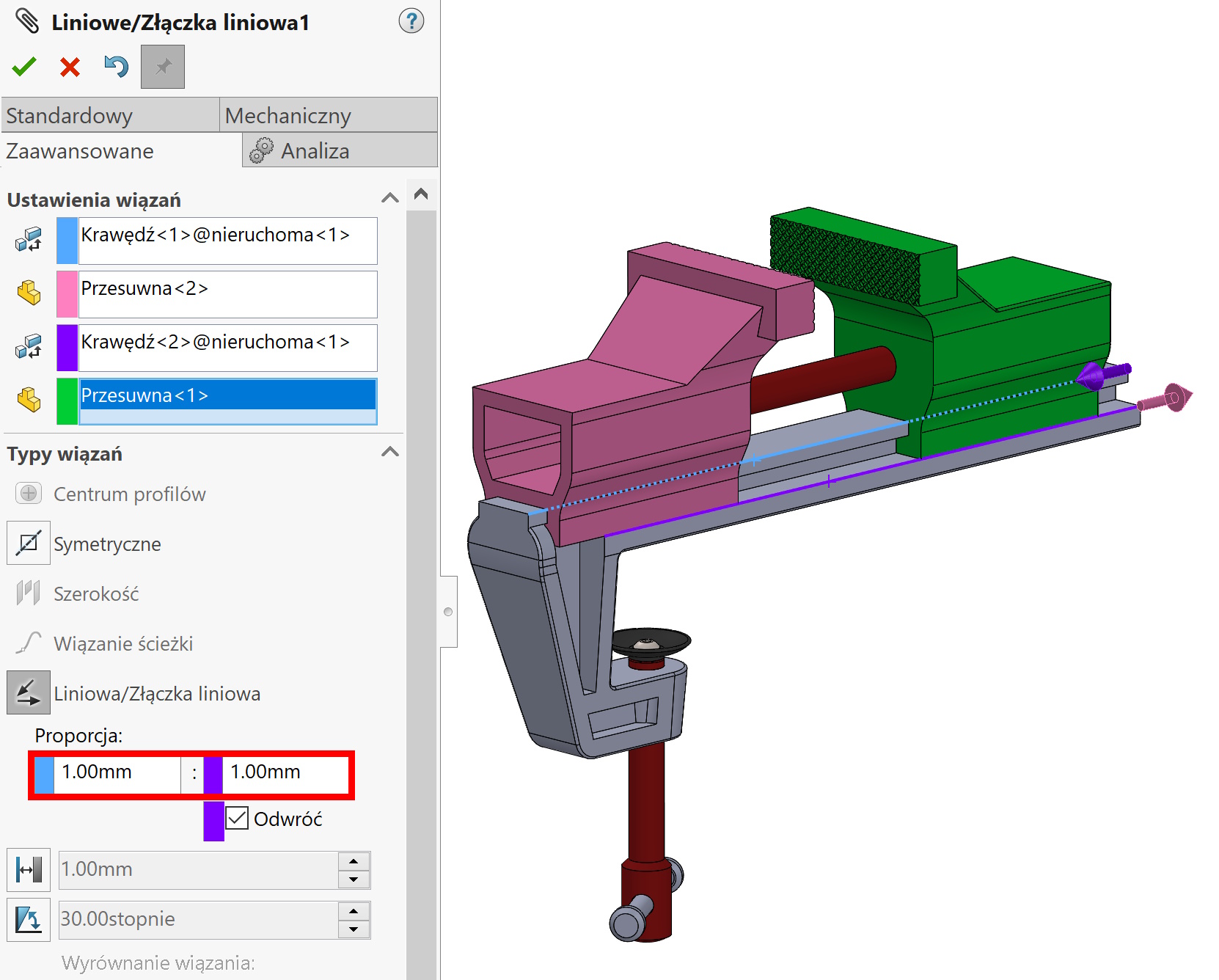
Less known binding from the cycle advanced, which serves to give linear motion to two components. Linear/Linear fitting It works this way, that we point to a component 1 and linear direction, on which it moves and the component 2 and direction of movement.
What is important, the direction can be anything linear (edge, axis, sketch line etc.) and it does not have to belong to this component.
After selecting the references, the program will display Proportion dependent on the length of the linear reference. For example,. If I mark two edges of the same length, to pojawi się przykładowo 300mm – 300mm, which I usually change into a proportion 1 : 1 (manually). Switch Reverse in turn, it is used to reverse the direction of movement.
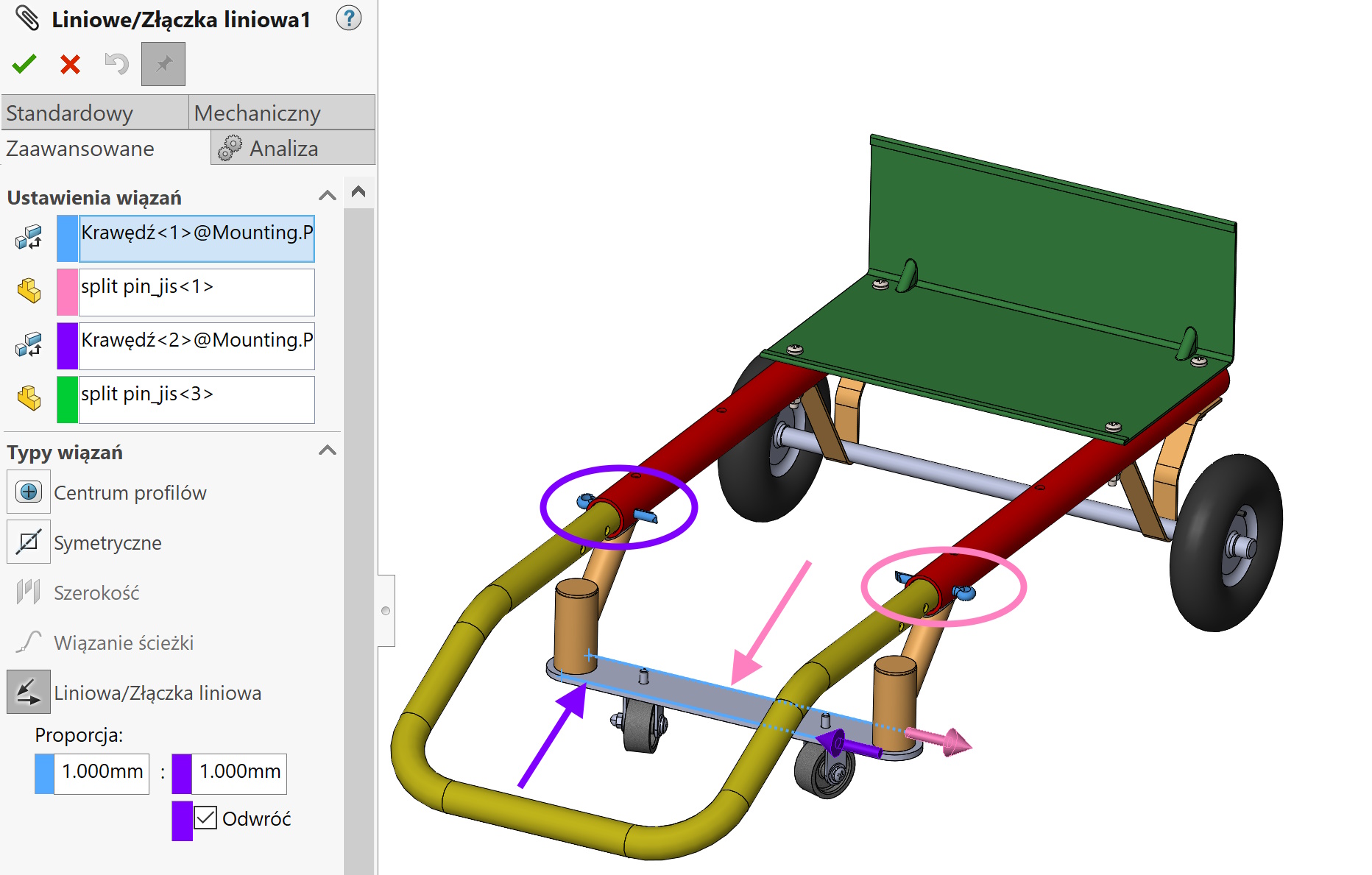

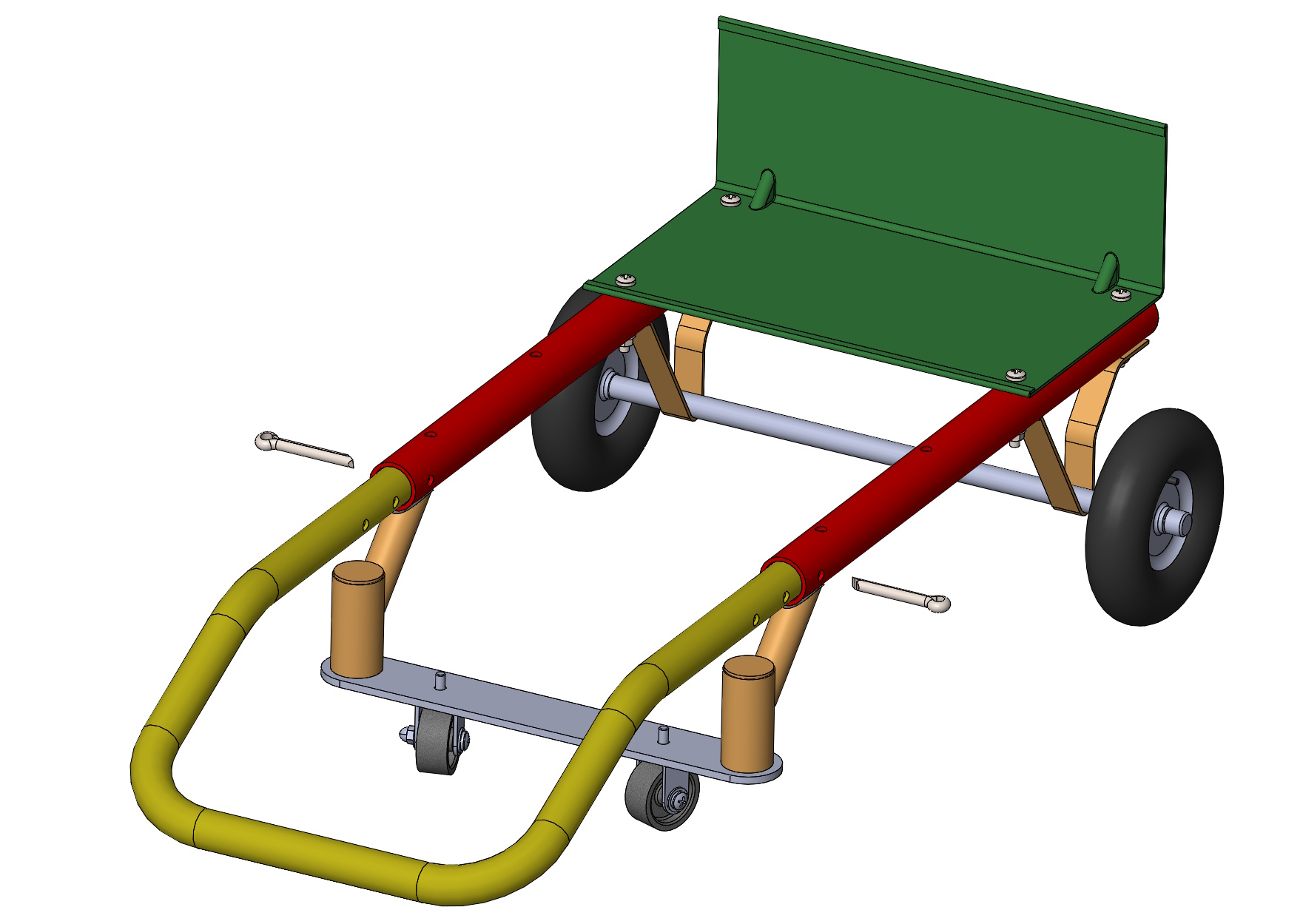
Of course, what you see below has not been made with a shot, and is the result of the binding operation Linear, where both pins slide/slide out simultaneously.

What is very important, Directions can be arbitrary, So you can define a related traffic in different directions. Nay, You can define a proportion other than 1 : 1 and in this way one component can move faster/slower from the second.
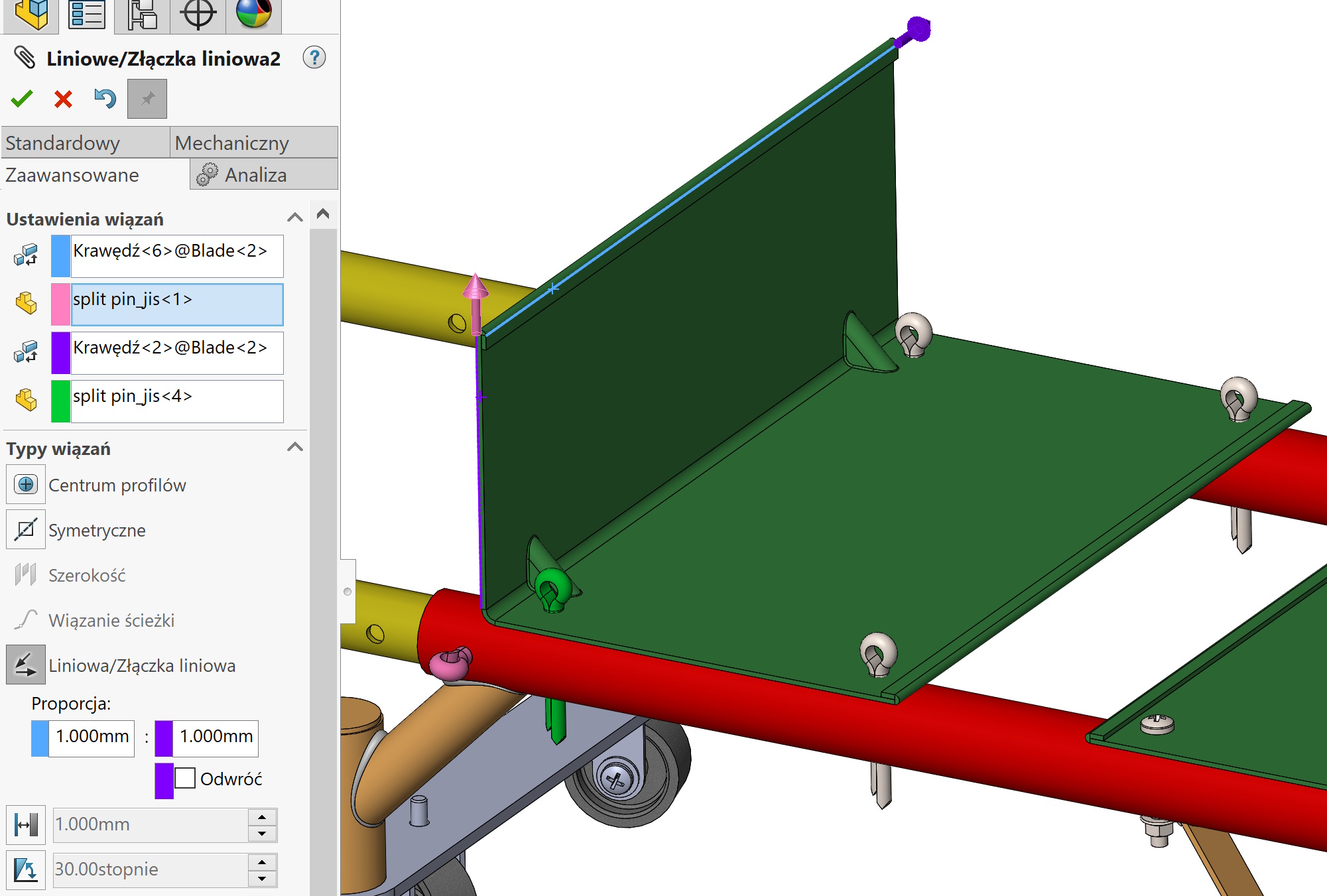

As a result, all boots slip in or extend at the same time. Of course, this example only served to illustrate how to work.

If someone asked about the most representative example, I will replace the jaws in the handle, which slide with one binding Liner.